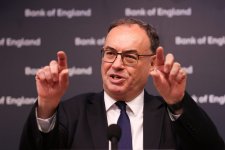
Following BoE Catherine Mann's remarks late Monday, EUR/GBP appreciated.
According to Mann of the BoE, job losses and a decline in consumer spending may make it difficult for UK companies to raise prices this year.
The greater chance of further ECB rate cuts in the future could hurt the euro.
Tuesday's European hours saw EUR/GBP trade at about 0.8350, continuing its gains for the second day in a row. Following comments made late Monday by Catherine Mann, a member of the Bank of England's (BoE) Monetary Policy Committee, the value of the currency cross increased while the GBP declined.
According to the Financial Times, BoE's Mann said that UK companies might find it difficult to raise prices this year as job losses and a decline in consumer spending restrain inflation. According to Mann, who will speak again, corporate pricing power is waning, which lowers inflationary pressures. We'll also be watching BoE Governor Andrew Bailey's comments later on Tuesday.
According to the British Retail Consortium (BRC), the UK's Like-for-Like Retail Sales grew 2.5% year over year in January 2025, which was slower than the 3.1% gain in December but still higher than the 0.2% market forecast. Although the performance is still good, BRC Chief Executive Helen Dickinson pointed out that it is unclear if it will continue to be so in the months to come.
US President Donald Trump overruled earlier trade agreements with important US allies and imposed a 25% tariff on steel and aluminum imports on Monday, doing away with all exemptions. The European Union (EU) could react "within an hour" if the United States moves forward with the proposed tariffs on European goods, German Chancellor Olaf Scholz had earlier threatened. The rise in trade tensions is making people more risk averse, which is straining the Euro, which is sensitive to risk, and limiting the EUR/GBP cross's gains.
Furthermore, growing worries about possible deflationary pressures in the Eurozone as a result of anticipated US tariffs have increased the likelihood of further ECB rate cuts, with markets now projecting the deposit rate could drop to 1.87% by December.
According to Mann of the BoE, job losses and a decline in consumer spending may make it difficult for UK companies to raise prices this year.
The greater chance of further ECB rate cuts in the future could hurt the euro.
Tuesday's European hours saw EUR/GBP trade at about 0.8350, continuing its gains for the second day in a row. Following comments made late Monday by Catherine Mann, a member of the Bank of England's (BoE) Monetary Policy Committee, the value of the currency cross increased while the GBP declined.
According to the Financial Times, BoE's Mann said that UK companies might find it difficult to raise prices this year as job losses and a decline in consumer spending restrain inflation. According to Mann, who will speak again, corporate pricing power is waning, which lowers inflationary pressures. We'll also be watching BoE Governor Andrew Bailey's comments later on Tuesday.
According to the British Retail Consortium (BRC), the UK's Like-for-Like Retail Sales grew 2.5% year over year in January 2025, which was slower than the 3.1% gain in December but still higher than the 0.2% market forecast. Although the performance is still good, BRC Chief Executive Helen Dickinson pointed out that it is unclear if it will continue to be so in the months to come.
US President Donald Trump overruled earlier trade agreements with important US allies and imposed a 25% tariff on steel and aluminum imports on Monday, doing away with all exemptions. The European Union (EU) could react "within an hour" if the United States moves forward with the proposed tariffs on European goods, German Chancellor Olaf Scholz had earlier threatened. The rise in trade tensions is making people more risk averse, which is straining the Euro, which is sensitive to risk, and limiting the EUR/GBP cross's gains.
Furthermore, growing worries about possible deflationary pressures in the Eurozone as a result of anticipated US tariffs have increased the likelihood of further ECB rate cuts, with markets now projecting the deposit rate could drop to 1.87% by December.