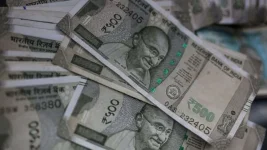
According to Forexvisit statistics, Indian Rupee (INR) crosses are trading negatively at the beginning of Wednesday. The exchange rate between the Euro (EUR) and the Indian Rupee (INR) is 96.71, down from its last closing of 96.95.
In the meantime, the GBP/INR pair closed at 114.20 at the previous closure, and the GBP is currently trading at 113.78 against the INR in early European trading hours, further losing momentum.
What effect does the Indian economy have on the rupee?
The Indian economy is among the fastest growing in the world, with an average growth rate of 6.13% between 2006 and 2023. India has drawn a lot of international investment due to its rapid growth. This covers both foreign funds' foreign indirect investment (FII) in Indian financial markets and foreign direct investment (FDI) in tangible projects. The demand for the Rupee (INR) increases with the amount of investment. INR is also impacted by changes in dollar demand from Indian importers.
What effect do oil prices have on the rupee?
Since a large portion of India's oil and gasoline are imported, changes in oil prices can directly affect the value of the rupee. Since oil is mostly traded in US dollars (USD) on global markets, an increase in oil prices will result in a rise in the demand for USD overall, forcing Indian importers to sell more Rupees to satisfy the demand, which will devalue the Rupee.
What effect does India's inflation have on the rupee?
The impact of inflation on the Rupee is complicated. In the end, it signifies a rise in the money supply, which lowers the value of the rupee as a whole. However, the Reserve Bank of India (RBI) will increase interest rates to lower it by limiting lending if it surpasses its 4% objective. The Rupee is strengthened by higher interest rates, particularly real rates (the difference between interest rates and inflation). They increase the profitability of India as a destination for foreign investors. A decline in inflation may help the rupee. However, the Rupee may depreciate as a result of decreased interest rates.
What effect does the seasonal demand for US dollars from banks and importers have on the Rupee?
For the most of its recent history, India has had a trade deficit, meaning that its imports exceed its exports. Since most international trade is conducted in US dollars, there are occasions when a large number of imports causes a sizable demand for US dollars, either because of seasonal demand or an order glut. Due to heavy selling to satisfy the demand for dollars, the rupee may depreciate during these times. Increased market volatility can cause demand for US dollars to soar, which would have an equally detrimental impact on the rupee.
In the meantime, the GBP/INR pair closed at 114.20 at the previous closure, and the GBP is currently trading at 113.78 against the INR in early European trading hours, further losing momentum.
What effect does the Indian economy have on the rupee?
The Indian economy is among the fastest growing in the world, with an average growth rate of 6.13% between 2006 and 2023. India has drawn a lot of international investment due to its rapid growth. This covers both foreign funds' foreign indirect investment (FII) in Indian financial markets and foreign direct investment (FDI) in tangible projects. The demand for the Rupee (INR) increases with the amount of investment. INR is also impacted by changes in dollar demand from Indian importers.
What effect do oil prices have on the rupee?
Since a large portion of India's oil and gasoline are imported, changes in oil prices can directly affect the value of the rupee. Since oil is mostly traded in US dollars (USD) on global markets, an increase in oil prices will result in a rise in the demand for USD overall, forcing Indian importers to sell more Rupees to satisfy the demand, which will devalue the Rupee.
What effect does India's inflation have on the rupee?
The impact of inflation on the Rupee is complicated. In the end, it signifies a rise in the money supply, which lowers the value of the rupee as a whole. However, the Reserve Bank of India (RBI) will increase interest rates to lower it by limiting lending if it surpasses its 4% objective. The Rupee is strengthened by higher interest rates, particularly real rates (the difference between interest rates and inflation). They increase the profitability of India as a destination for foreign investors. A decline in inflation may help the rupee. However, the Rupee may depreciate as a result of decreased interest rates.
What effect does the seasonal demand for US dollars from banks and importers have on the Rupee?
For the most of its recent history, India has had a trade deficit, meaning that its imports exceed its exports. Since most international trade is conducted in US dollars, there are occasions when a large number of imports causes a sizable demand for US dollars, either because of seasonal demand or an order glut. Due to heavy selling to satisfy the demand for dollars, the rupee may depreciate during these times. Increased market volatility can cause demand for US dollars to soar, which would have an equally detrimental impact on the rupee.