USD/CAD Price Forecast: On tenterhooks around 1.4300USD/CAD trades with caution around 1.4300 as Trump threatens 25% tariff hikes on Canada.
PM Trudeau of Canada reaffirmed that if Trump's tariffs are announced, the government is ready to react.
Later this month, investors anticipate a 25 basis point interest rate cut from the BoC.
During Wednesday's European session, the USD/CAD pair is trading cautiously close to 1.4300. With US President Donald Trump proposing 25% tariffs on China and Mexico that would take effect on February 1, the Loonie pair is still under pressure. The announcement of Trump's tariffs has lowered Canada's economic prospects.
According to Reuters, Canadian Prime Minister Justin Trudeau responded to that on Tuesday by saying that his government is prepared to "respond to all scenarios" in the event that Trump imposes tariffs on Canada.
Despite expectations of more policy divergence, the Canadian dollar's (CAD) overall appeal is still low when compared to the US dollar (USD). At the policy meeting next week, investors anticipate that the Bank of Canada (BoC) will further lower interest rates by 25 basis points (bps) to 3%. Following the release of the Consumer Price Index (CPI) data for December, which revealed that the annual headline inflation slowed to 1.8%, dovish bets on the BoC have increased.
In contrast, the CME FedWatch tool predicts that the Fed will maintain interest rates for the next three policy meetings.
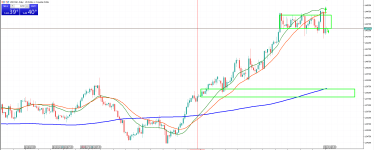
For more than a month, the USD/CAD pair has been trading in a narrow range of 1.4260-1.4465. As the 50-day Exponential Moving Average (EMA), which is trading at 1.4235, slopes higher, the outlook for the Loonie pair stays stable.
A sideways trend is indicated by the 14-day Relative Strength Index (RSI), which ranges from 40.00 to 60.00.
If the asset breaks above Tuesday's high of 1.4518, the Loonie pair's rally could move closer to the round-level resistance of 1.4600 and the March 2020 high of 1.4668.
Conversely, a decline below the low of 1.4120 on December 11 might push the asset toward the high of 1.4080 on December 4 and then the psychological support of 1.4000.
USDCAD
PM Trudeau of Canada reaffirmed that if Trump's tariffs are announced, the government is ready to react.
Later this month, investors anticipate a 25 basis point interest rate cut from the BoC.
During Wednesday's European session, the USD/CAD pair is trading cautiously close to 1.4300. With US President Donald Trump proposing 25% tariffs on China and Mexico that would take effect on February 1, the Loonie pair is still under pressure. The announcement of Trump's tariffs has lowered Canada's economic prospects.
According to Reuters, Canadian Prime Minister Justin Trudeau responded to that on Tuesday by saying that his government is prepared to "respond to all scenarios" in the event that Trump imposes tariffs on Canada.
Despite expectations of more policy divergence, the Canadian dollar's (CAD) overall appeal is still low when compared to the US dollar (USD). At the policy meeting next week, investors anticipate that the Bank of Canada (BoC) will further lower interest rates by 25 basis points (bps) to 3%. Following the release of the Consumer Price Index (CPI) data for December, which revealed that the annual headline inflation slowed to 1.8%, dovish bets on the BoC have increased.
In contrast, the CME FedWatch tool predicts that the Fed will maintain interest rates for the next three policy meetings.
For more than a month, the USD/CAD pair has been trading in a narrow range of 1.4260-1.4465. As the 50-day Exponential Moving Average (EMA), which is trading at 1.4235, slopes higher, the outlook for the Loonie pair stays stable.
A sideways trend is indicated by the 14-day Relative Strength Index (RSI), which ranges from 40.00 to 60.00.
If the asset breaks above Tuesday's high of 1.4518, the Loonie pair's rally could move closer to the round-level resistance of 1.4600 and the March 2020 high of 1.4668.
Conversely, a decline below the low of 1.4120 on December 11 might push the asset toward the high of 1.4080 on December 4 and then the psychological support of 1.4000.
USDCAD