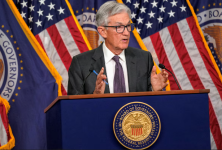
Francesco Pesole, an ING strategist, points out that the US Dollar (USD) has rebounded despite ongoing market volatility and geopolitical tensions. Pesole notes that rising fuel and airline prices are pushing the US Consumer Price Index (CPI) back toward 4%, but the Federal Reserve (Fed) still views this as a supply-side issue rather than a demand-driven inflationary pressure. He also suggests that Powell’s upcoming final press conference might take a more hawkish tone, potentially influencing the US dollar. Additionally, strong performance from major US tech companies could have further effects on the foreign exchange market.
The Federal Reserve's position and the performance of stocks influence the value of the Dollar.
The dollar has bounced back a bit in the last 24 hours. While worries about no progress on the US-Iran agreement definitely contributed, it seems the main reason for the dollar's recovery was some nervousness in US stock markets because of concerns about AI. As we talked about yesterday, right now, global stocks are the biggest influence on the dollar in the short term, according to our models.
Domestically, the major event is the Federal Reserve's rate announcement at 19 BST/20 CET. Here's our preview. Higher fuel and airline prices are pushing CPI back toward 4%, but the Fed has so far indicated that it sees this as a temporary supply shock rather than a demand-driven inflation spiral.
There is a good chance the Fed will indicate that it's still too early to decide on the inflation-growth trade-off and its implications for monetary policy. However, recent developments in the Middle East are not promising. Although Powell's statements might be viewed with some caution, especially since this is likely his final press conference, there is a risk that he might lean towards a more hawkish approach.
The strong dollar response to the unexpected tight monetary stance might get worse because US stocks could be affected, and they'll soon face a big test with earnings reports from Alphabet, Microsoft, Amazon, and Meta.
In the end, the recovery of the USD didn't last very long, and we think the movement of money at the end of the month might have contributed to that. Today, we'll be watching to see if Tehran responds after President Trump said Iran is in a "state of collapse" and wants to reopen the Strait of Hormuz right away. Meanwhile, the Wall Street Journal reported that Trump has told officials to get ready for a long-lasting blockade of the Strait.
The Federal Reserve's position and the performance of stocks influence the value of the Dollar.
The dollar has bounced back a bit in the last 24 hours. While worries about no progress on the US-Iran agreement definitely contributed, it seems the main reason for the dollar's recovery was some nervousness in US stock markets because of concerns about AI. As we talked about yesterday, right now, global stocks are the biggest influence on the dollar in the short term, according to our models.
Domestically, the major event is the Federal Reserve's rate announcement at 19 BST/20 CET. Here's our preview. Higher fuel and airline prices are pushing CPI back toward 4%, but the Fed has so far indicated that it sees this as a temporary supply shock rather than a demand-driven inflation spiral.
There is a good chance the Fed will indicate that it's still too early to decide on the inflation-growth trade-off and its implications for monetary policy. However, recent developments in the Middle East are not promising. Although Powell's statements might be viewed with some caution, especially since this is likely his final press conference, there is a risk that he might lean towards a more hawkish approach.
The strong dollar response to the unexpected tight monetary stance might get worse because US stocks could be affected, and they'll soon face a big test with earnings reports from Alphabet, Microsoft, Amazon, and Meta.
In the end, the recovery of the USD didn't last very long, and we think the movement of money at the end of the month might have contributed to that. Today, we'll be watching to see if Tehran responds after President Trump said Iran is in a "state of collapse" and wants to reopen the Strait of Hormuz right away. Meanwhile, the Wall Street Journal reported that Trump has told officials to get ready for a long-lasting blockade of the Strait.